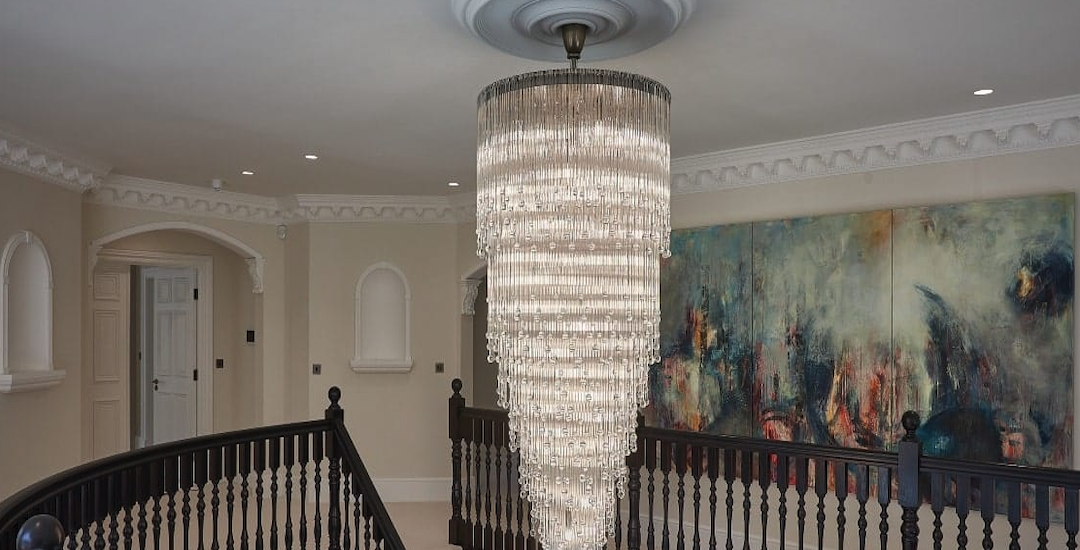
The ‘Stairwell Statement: The Chandelier’s Impact’ refers to a significant artistic installation that utilized a large chandelier suspended within a specific stairwell context. This piece, often cited as a landmark in experiential art, explores themes of light, perception, and the transformation of ordinary spaces. Its impact extends beyond its visual presence, influencing how viewers engage with architecture and art in public and semi-public environments.
The concept for ‘Stairwell Statement: The Chandelier’ Soholife emerged from a desire to recontextualize everyday architectural elements through artistic intervention. The artist, whose work often engages with the interplay of light and shadow, identified the inherent potential of a stairwell – a transitional zone characterized by movement and a particular quality of light.
Theoretical Underpinnings
The project draws upon several artistic and architectural theories. Foremost among these is the concept of the flâneur, the urban stroller who observes the city and its inhabitants. In this context, the stairwell becomes a micro-environment for contemplation, and the chandelier a focal point for this observational act. The piece also resonates with situational aesthetics, an approach that seeks to manipulate social environments and create experiences. The stairwell, a functional space, is elevated to a site of aesthetic consideration, much like how art critics might analyze a canvas.
The Role of Light
Light, as a fundamental element of both architecture and art, is central to the ‘Stairwell Statement.’ The chandelier, a traditional symbol of grandeur and illumination, is employed not merely for its functional aspect but for its inherent symbolic weight. The manipulated lighting conditions within the stairwell create an environment that alters perception, turning a mundane passage into a space of heightened awareness. This can be compared to how a prism refracts light, revealing hidden colors.
Site Selection: The Stairwell as Canvas
The choice of a stairwell was deliberate, offering a unique architectural interplay of verticality, linearity, and the flow of human movement. Stairwells are often overlooked by design, functioning primarily as egress or access points. By introducing a prominent, unexpected object like a chandelier, the artist aimed to disrupt this utilitarian perception.
Architectural Integration
The success of the ‘Stairwell Statement’ is intrinsically linked to its integration with the architectural volume of the stairwell. The scale, material, and suspension of the chandelier were carefully considered to harmonize with, and simultaneously challenge, the existing structure. The repetition of steps and landings provided a rhythmic backdrop against which the static form of the chandelier was placed, creating a visual dialogue.
Scale and Proportion
The dimensions of the chandelier were a critical factor in its impact. It was designed to be large enough to dominate the space without overwhelming it, creating a sense of presence that invited closer inspection. The artist sought a balance, much like a composer balancing different instruments in a symphony.
Materiality and Form
The materials used in the chandelier, whether traditional crystal or more contemporary mediums, contributed to its interaction with light and its visual weight. The form of the chandelier itself, often intricate and multifaceted, acted as a lens through which the surrounding architecture was reinterpreted.
The Chandelier as Object and Symbol
The chandelier in ‘Stairwell Statement’ functions on multiple levels. It is an object of considerable visual interest, but it also carries a rich symbolic history. Its presence in the stairwell prompts viewers to consider these layers of meaning.
Transformation of Space
The primary impact of the chandelier is its ability to transform the perceived nature of the stairwell. What was once a passage of utility becomes a destination for observation and reflection. This transformation is achieved through the manipulation of light and the introduction of an element that demands attention.
Sensory Experience
The installation is designed to engage multiple senses. The visual spectacle of light refracting through the chandelier is paramount, but the ambient sounds of footsteps on the stairs, amplified or altered by the space, also contribute to the overall sensory experience. The very act of ascending or descending the stairs becomes part of the artwork.
The Play of Light and Shadow
The chandelier, by its very nature, is a generator of light. In the controlled environment of the stairwell, this light interacts with the architectural surfaces to create dynamic patterns of light and shadow. These patterns shift as one moves through the space, offering a constantly evolving visual landscape. This is akin to the ephemeral beauty of clouds passing over a mountainside.
Visual Metaphors
The chandelier can be seen as a metaphor for various concepts. It can represent knowledge seeking to illuminate the darkness of ignorance, or wealth and aspiration contrasted with the everyday functionality of the stairwell. The artist allows for these interpretations rather than dictating a single meaning.
Disruption of Routine
The unexpected placement of such a prominent decorative element in a functional space disrupts the routine perception of the stairwell. It forces individuals to pause, to look, and to question their surroundings. This interruption of the mundane is a key aspect of the artwork’s impact.
The Unfamiliar in the Familiar
By introducing the extraordinary into the ordinary, the ‘Stairwell Statement’ highlights the potential for wonder and discovery within everyday environments. The familiar stairwell, like a well-worn path, is suddenly rendered new and intriguing.
Encouraging Observation
The installation encourages a heightened level of observation. Viewers are prompted to notice the details of the chandelier, the way light falls, and the textures of the stairwell. This cultivation of attentiveness is a significant outcome of the artwork.
Cognitive Engagement
The artwork moves beyond passive viewing, engaging the viewer’s intellect. The symbolic weight of the chandelier and its contextual placement invites contemplation and interpretation, prompting a more active form of aesthetic engagement.
Public Reaction and Critical Reception
The ‘Stairwell Statement: The Chandelier’ garnered considerable attention, provoking a range of responses from the public and critical discourse. Its unique approach to public art and its intervention in architectural spaces resonated with many.
Initial Impressions
Upon encountering the installation, many individuals reported surprise and curiosity. The dramatic visual presence of the chandelier often served as a conversation starter, prompting discussions about art, space, and its purpose. This immediate engagement is a hallmark of successful public art.
Qualitative Assessments
Anecdotal evidence suggests that viewers found the artwork to be both beautiful and thought-provoking. The transformative effect on the stairwell was frequently noted, with many describing it as a welcome enhancement to an often-neglected area.
Emotional Resonance
The lighting effects and the sheer visual spectacle of the chandelier often evoked emotional responses, ranging from awe to a sense of quiet contemplation. The ability of art to elicit such varied emotional reactions is a testament to its power.
Case Studies of Viewer Experience
Documented accounts from visitors reveal a spectrum of engagement. Some individuals spent considerable time observing the interplay of light, while others were content with a brief, impactful encounter. These varied experiences underscore the subjective nature of art appreciation.
Critical Analysis
Art critics and theorists engaged with the ‘Stairwell Statement’ from various perspectives. Discussions often focused on its innovative use of materials, its engagement with architectural context, and its contribution to the discourse on public art.
Theoretical Frameworks Applied
Scholars employed theoretical frameworks such as phenomenology (the study of experience and consciousness) to analyze how the installation altered the lived experience of navigating the stairwell. Concepts from architectural theory were also applied to understand the relationship between the artwork and its built environment.
Debates on Public Art
The installation also sparked conversations about the role of art in public spaces. Some commended its ability to democratize art by placing it in an accessible, non-traditional gallery setting, while others questioned its longevity and maintenance.
The Ephemeral Nature of Art
In discussions about public art, the question of inherent ephemerality often arises. The ‘Stairwell Statement,’ like many installations, raises considerations about its long-term impact and potential for replication or adaptation.
The Evolution of the Stairwell Statement
The ‘Stairwell Statement’ has not remained static. Its ongoing presence or, in some cases, its temporary nature, has led to an evolution in understanding its impact and potential.
Legacy and Influence
The ‘Stairwell Statement: The Chandelier’ has served as an inspiration for subsequent artistic interventions in architectural spaces. Its success has encouraged other artists and institutions to consider the transformative potential of light and sculptural elements within functional environments.
Replication and Adaptation
While direct replication may be challenging due to site-specific considerations, the principles behind the ‘Stairwell Statement’ have been adapted in various forms. This includes installations that use light projectors, suspended elements, or other interventions to reimagine transit spaces.
The ‘Chandelier’ Motif
The use of chandeliers in art installations has become a recognized motif, with artists drawing inspiration from the original ‘Stairwell Statement’ to explore similar themes of grandeur, light, and recontextualization. The chandelier, as a trope, has gained new artistic currency.
Interdisciplinary Collaborations
The project also paved the way for increased interdisciplinary collaborations between artists, architects, and engineers, who must work together to realize such ambitious installations. This synergy is crucial for pushing the boundaries of what is possible in art and design.
Enduring Significance
The enduring significance of the ‘Stairwell Statement’ lies in its ability to demonstrate how artistic intervention can fundamentally alter our perception of the built environment. It reminds us that even the most utilitarian spaces can be imbued with beauty and meaning.
The Power of Context
The installation underscores the critical role of context in art. The same chandelier, placed in a traditional setting, would elicit a different response. Its impact is deeply woven into the fabric of the stairwell itself.
Reimagining Public Space
The ‘Stairwell Statement’ serves as a potent example of how public spaces can be reimagined and revitalized through artistic engagement. It challenges us to look beyond the obvious and to discover the potential for art in our everyday lives.
The Art of the Unexpected
Ultimately, the ‘Stairwell Statement: The Chandelier’ is a testament to the power of the unexpected. By introducing a singular, striking element into a familiar architectural form, it creates a memorable and meaningful experience that continues to resonate.
Conclusion: A Lasting Illumination
The ‘Stairwell Statement: The Chandelier’ is more than just an art installation; it is an experience that alters perception and redefines the relationship between art and architecture. Its ability to transform a mundane space into a site of contemplation and wonder is a testament to the power of creative intervention.
The Illuminating Effect
The chandelier, in its radiant glory, acts as a beacon, illuminating not only the physical space but also new possibilities for artistic engagement. It demonstrates that art can be found in the most unlikely of places, waiting to be discovered.
A Shift in Perspective
The impact of this statement is a shift in perspective. It prompts viewers to consider the spaces they inhabit with a renewed sense of curiosity and appreciation. The stairwell, once a forgotten thoroughfare, becomes a stage for visual poetry.
The Enduring Dialogue
The dialogue initiated by ‘Stairwell Statement: The Chandelier’ continues. It encourages us to question how we design, experience, and interact with our built environments, urging us to seek out and create moments of unexpected beauty.
The Light That Remains
Even after the installation might cease to exist in its original form, the ‘light’ of its impact remains. It is a testament to the enduring power of art to transform, to inspire, and to leave an indelible mark on our collective consciousness.