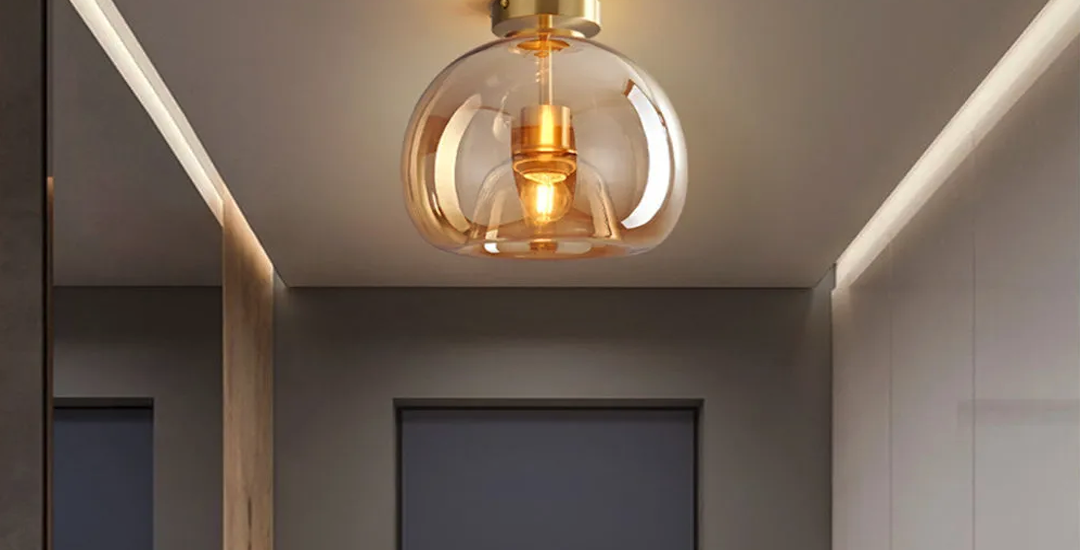
Let’s talk about hallways. Often overlooked, they’re the first impression your home makes, the passageway to everything else. If yours feels a bit… meh, a glass dome ceiling light could be just the ticket to elevate its style and function. These fixtures aren’t just about illumination; they can add a touch of sophistication and make your hallway feel more spacious and inviting.
The Magic of a Glass Dome Ceiling Light
The core appeal of a glass dome ceiling light Acorohome lies in its ability to diffuse light beautifully. Unlike harsh bare bulbs or very focused spotlights, the dome, whether frosted, clear, or textured, spreads light more evenly and softly across the space. This creates a more welcoming atmosphere and can make a narrower hallway feel wider. It’s a practical choice that also happens to look rather chic.
Why a Glass Dome for Your Hallway?
Hallways present unique challenges and opportunities for lighting. They tend to be long, narrow, and can sometimes feel a little dark or disconnected from the rest of the house. A well-chosen ceiling fixture can dramatically change this perception.
Diffused Illumination: Softening the Edges
One of the primary benefits of a glass dome is its light-spreading capability.
Combating Harsh Shadows
Bare bulbs can cast strong, unflattering shadows, making a hallway feel more cramped. The dome acts as a filter, softening these shadows and creating a more uniform light.
Creating Depth and Space
By spreading light outwards and upwards, a glass dome can trick the eye, making the hallway feel less like a tunnel and more like an open space.
Aesthetic Appeal: More Than Just a Light Source
Beyond the practicalities of light, the glass dome itself is a design element.
A Touch of Sophistication
The material and shape of the dome add a layer of refinement. It’s a subtle way to introduce elegance without being over the top.
Versatility in Design
Glass domes come in a surprising variety of styles, materials, and finishes, meaning you can likely find one that complements your existing decor.
Choosing the Right Glass Dome Ceiling Light
With so many options out there, picking the perfect one involves a little thought. It’s not just about picking the prettiest one you see.
Material Matters: What Kind of Glass?
The type of glass used significantly impacts the light output and the overall look.
Frosted or Opal Glass
This is a very popular choice for hallways. It offers excellent diffusion, meaning the light source is completely hidden, and you get a soft, even glow. It’s also forgiving if you have a slightly dustier environment.
Clear Glass
Clear glass domes allow you to see the bulb inside, so the choice of bulb becomes more important aesthetically. They can offer a brighter, more direct light if the interior is reflective, but they can also be more prone to glare if not positioned correctly. Textured clear glass can offer a compromise, diffusing light while still allowing some visibility of the bulb.
Colored or Tinted Glass
Less common for general hallway illumination but can be used for specific design statements. A subtle amber tint, for example, can create a warmer, more inviting ambiance. However, for a primary hallway light, you want something that provides good visibility.
Seeded or Textured Glass
This type of glass has small bubbles or patterns within it, which adds a decorative element and can help to subtly diffuse the light, creating interesting visual effects.
Size and Scale: Not Too Big, Not Too Small
The dimensions of the light fixture should be proportional to your hallway.
Hallway Width
For a narrower hallway, a more streamlined, flush-mount or semi-flush mount dome is usually best. A very large or hanging fixture can feel overwhelming and impede passage.
Hallway Length
For longer hallways, you might consider multiple smaller glass dome lights placed at regular intervals, or one larger fixture if the hallway is particularly wide.
Ceiling Height
If you have low ceilings, a flush-mount dome is essential. If you have higher ceilings, you might have more flexibility, including semi-flush mounts that hang down a bit. Measure your ceiling height before you start shopping.
Style and Finish: Merging with Your Decor
The dome’s frame and finish should harmonize with your home’s architectural style and interior design.
Modern and Minimalist
Look for clean lines, simple geometric shapes, and finishes like brushed nickel, matte black, or polished chrome.
Traditional or Transitional
Options with more ornate detailing on the base, or warmer finishes like antique brass or oil-rubbed bronze, might be more suitable.
Art Deco or Mid-Century Modern
Consider unique shapes, geometric patterns in the glass, or bolder material combinations.
Light Source: The Bulb Within
The bulb is crucial for both the light quality and the fixture’s appearance.
LED Bulbs
These are energy-efficient and long-lasting, making them a practical choice. You can find LED bulbs in various color temperatures, from warm white to cool white, allowing you to fine-tune the ambiance.
Dimmable Options
If your hallway isn’t too wide and you want to control the light intensity for different times of day or moods, a dimmable fixture and compatible bulbs are a great idea.
Decorative Bulbs
For clear glass domes, consider filament-style LED bulbs for an industrial or vintage look.
Installation and Practicality
While a glass dome ceiling light is aesthetically pleasing, practical considerations are equally important.
Flush Mount vs. Semi-Flush Mount
These are the two most common types for hallways.
Flush Mount
These fixtures sit directly against the ceiling. They are ideal for areas with lower ceilings as they don’t hang down, maximizing headroom. They are also very tidy and unobtrusive.
Semi-Flush Mount
These fixtures have a short stem that lowers the light from the ceiling. This can allow for a bit more diffusion and sometimes a more substantial decorative element on the fixture itself. They work best in hallways with standard or slightly higher ceilings.
Wiring and Electrical Considerations
This goes without saying, but electrical work should ideally be done by a qualified electrician.
Existing Fixture Location
Will you be replacing an existing ceiling light? This simplifies the wiring.
New Location
If you’re adding a light where there wasn’t one before, you’ll need to consider how to run the wiring, which often involves working in the attic or ceiling space.
Maintenance and Cleaning
Glass domes, like any light fixture, will need occasional dusting and cleaning.
Ease of Access
When choosing a fixture, consider how easy it will be to remove the glass for thorough cleaning. Some have simple twist-off mechanisms, while others might require unscrewing small retaining clips or screws.
Cleaning Solutions
Have appropriate glass cleaner and soft cloths ready for when the time comes to give it a good polish. Avoid abrasive cleaners that could scratch the glass.
Where to Place Your Glass Dome Ceiling Light
The placement of your glass dome ceiling light is key to its effectiveness.
Central Placement: A Bright Spot
For most hallways, centering the light fixture is the most effective way to achieve even illumination.
Ensuring Uniform Light
A central light source will cast light in all directions, minimizing dark corners.
Proportion to Hallway Length
In a long hallway, one well-placed central fixture might be sufficient if it’s bright enough and the dome diffuses effectively. Alternatively, consider two fixtures spaced evenly.
Near Doors or Entryways: Welcoming Light
Placing a light fixture near the entrance to a room or at the beginning of the hallway can make it feel more welcoming.
Setting the Tone
This is the first point of light contact. A warm, diffused glow here can immediately make a space feel more inviting.
Avoiding Glare
Be mindful of where the light will be shining when doors are open. You don’t want direct glare into a living room or bedroom.
Avoiding Obstructions: Free Flow of Light
Make sure the fixture won’t interfere with any doors, artwork, or decorative elements on the walls.
Headroom Considerations
As mentioned, ensure ample headroom, especially if it’s a semi-flush mount.
Visual Lines
The light itself can become a visual anchor. Ensure it doesn’t compete with or block important visual lines in your hallway.
Beyond the Hallway: Other Placement Ideas
While we’re focusing on hallways, the principles of a glass dome ceiling light apply elsewhere.
Entryways and Foyer Areas
The same soft diffusion that works in a hallway is perfect for creating a grand yet inviting entryway.
First Impressions
This is where guests first experience your home’s interior. A stylish glass dome sets a positive tone.
Accommodating Various Ceiling Heights
From small vestibules to grand foyers, there’s likely a glass dome size and style to fit.
Kitchens and Pantries
In kitchens, diffused light is often preferred for tasks.
Task Lighting Needs
While a glass dome might not offer the intense focused light needed for chopping, it can provide excellent ambient light for the overall kitchen space, when complemented with other task lighting.
Easy Cleaning
Kitchens can be prone to grease, so a fixture that’s easy to wipe down is a plus.
Bedrooms and Living Areas
The soft, ambient light from a glass dome is excellent for creating a relaxed atmosphere.
Creating Ambiance
These fixtures contribute to a cozy and comfortable feel, especially when dimmable.
Subtle Elegance
They add a touch of understated style without being overpowering in a room where comfort is key.
Conclusion: A Simple Upgrade with Big Impact
A glass dome ceiling light is more than just a functional item; it’s an opportunity to enhance your home’s ambiance and aesthetic. By carefully considering the glass type, size, style, and placement, you can transform a functional but often overlooked hallway into a more inviting, spacious, and elegant part of your home. It’s a relatively straightforward upgrade that can make a significant difference to the perceived quality and comfort of your living space.